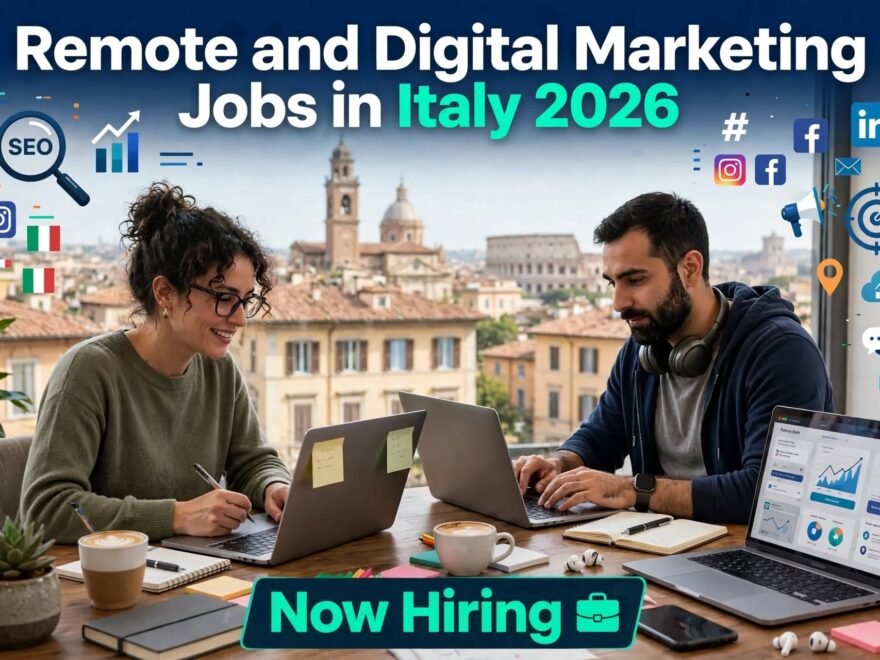
Italy is famous for fashion, food, design and Ferrari. Behind those brands sits a fast-changing digital economy. Italian companies sell wine, furniture and luxury goods to the whole world through online channels, and they need people who can make that work. The result is steady demand for digital marketing jobs in Italy, from SEO and paid advertising to social media, email and e-commerce growth.
Remote work has added another layer. Many Italian businesses now hire hybrid or fully remote marketers, and some hire people living outside the country. If you want to build a marketing career in Italy, or work for an Italian company from home, it helps to know exactly what employers are looking for.
This guide covers:
- How the Italian digital marketing market looks today
- The most in-demand roles
- The skills and tools employers expect
- Typical salary ranges
- Visa and work-permit basics
- Practical steps to get hired
Let’s start with the market itself.
Read Also: Engineering Jobs in Italy: Mechanical, Automation and Renewable Energy Careers
Why Italy Is a Strong Market for Digital Marketers
A Business Culture Going Digital
Italy’s economy is built largely on small and medium-sized enterprises (SMEs). Many of these family-run businesses were slow to adopt digital tools. Over the last several years, e-commerce growth and changing customer habits have pushed them online. A furniture maker in Veneto or an olive oil producer in Puglia now needs a website, a social media presence and a way to reach international buyers.
That shift creates demand for marketers who can:
- Build and grow online sales channels
- Reach customers in several languages
- Measure results with data
- Tell a brand story that works online
Made in Italy Brands Need Global Reach
The “Made in Italy” label carries real weight abroad. Brands in fashion, food, wine, design and tourism want to turn that reputation into online sales. They look for marketers who understand both Italian brand values and international audiences. That is a big opening for English-speaking marketing professionals.
Remote Work Is Now Normal
Italy formally recognized flexible work through its “lavoro agile” (smart working) framework, and the pandemic made it mainstream. Today, hybrid arrangements are common in marketing, especially in tech companies, agencies and e-commerce businesses. Fully remote roles exist too, though they are more competitive.
Where the Jobs Are
Digital marketing jobs in Italy cluster in a few places.
Milan: The Main Hub
Milan is Italy’s business and media capital. Most agencies, startups, fashion houses and multinational offices are based here. If you want the widest choice of marketing jobs in Milan, this is the city to target.
Rome
Rome offers opportunities in tourism, public-sector communication, consulting and media. It is also home to many international organizations.
Turin, Bologna and Florence
- Turin: automotive, technology and design
- Bologna: food, events and a growing startup scene
- Florence: fashion, luxury and tourism marketing
Remote and Hybrid Roles
A growing share of listings can be done from anywhere in Italy, or from abroad. These are common in SaaS companies, e-commerce brands and digital agencies.
The Most In-Demand Digital Marketing Roles
1. SEO Specialist
Companies want to rank well on Google, especially for international markets. SEO jobs in Italy often involve technical audits, content strategy and link building. Italian-language SEO knowledge is a big advantage.
2. Performance Marketing / Paid Ads Specialist
This role covers Google Ads, Meta Ads, LinkedIn Ads and increasingly TikTok. Employers want people who can manage budgets and prove a return on ad spend.
3. Social Media Manager
Brands in fashion, food and tourism rely on visual storytelling. Social media manager jobs in Italy often combine strategy, content planning, community management and reporting.
4. Content Marketer / Copywriter
Companies need blog posts, product descriptions, email campaigns and website copy. Strong writers in English are valued by exporters, and native-level Italian writers are in constant demand.
5. E-commerce Marketing Manager
This role links marketing directly to revenue. It involves product pages, marketplaces such as Amazon, conversion rate optimization and customer retention.
6. Email and CRM Marketer
Automation platforms and customer data have made email a core channel. Marketers who can segment audiences and build automated flows are valued.
7. Marketing Analyst
Data skills are in short supply. Analysts who can work with Google Analytics 4, dashboards and attribution models stand out.
8. Influencer and Brand Partnerships Manager
Italian brands work heavily with creators. This role mixes negotiation, campaign management and measurement.
What Employers Really Want
Job descriptions vary, but the same expectations appear again and again.
Hard Skills
1. Data literacy. Employers want marketers who make decisions from numbers, not instinct. You should be comfortable with:
- Google Analytics 4
- Google Search Console
- Looker Studio or similar dashboard tools
- Basic spreadsheet analysis
2. Channel expertise. Be strong in at least one area, such as SEO, paid media, email or social, and have working knowledge of the others. Employers prefer “T-shaped” marketers: deep in one skill, broad across many.
3. Marketing tools. Common tools named in Italian job ads include:
- SEMrush, Ahrefs or Moz for SEO
- Google Ads and Meta Business Suite for paid campaigns
- HubSpot, Mailchimp or ActiveCampaign for automation
- Shopify, WooCommerce or Magento for e-commerce
- Canva, Figma or Adobe tools for basic design
4. Content and copy skills. Clear, persuasive writing matters in every channel.
5. Basic AI tool fluency. Employers increasingly expect marketers to use AI tools for research, drafts and analysis, while still applying human judgment and brand voice.
Language Skills
This is where many foreign applicants get stuck, so it deserves honesty.
- Italian: For roles at local companies, most employers expect at least B2 level Italian, and often more for content or social media work.
- English: Essential in international companies, startups and export-focused brands.
- Other languages: German, French, Spanish, Arabic or Chinese can set you apart, especially for companies selling abroad.
If your Italian is limited, target English-speaking roles in multinational offices, tech startups and international e-commerce companies. You can improve your Italian while working.
Soft Skills
- Adaptability: Algorithms and platforms change constantly.
- Communication: You will explain results to non-marketers.
- Cultural awareness: Italian business culture values relationships and personal trust.
- Initiative: Smaller companies want self-starters who can own projects without heavy supervision.
- Reliability in remote settings: Meeting deadlines and communicating clearly matter even more when no one sees you working.
Proof Beats Promises: Build a Portfolio
Italian employers, like employers everywhere, want evidence. A strong portfolio can outweigh a missing degree.
Include:
- Case studies with clear goals, actions and measurable results
- Sample campaigns, even self-initiated ones
- A personal website or blog that shows your SEO and writing skills
- Screenshots or dashboards (with confidential data removed)
- Certifications such as Google Analytics, Google Ads, Meta Blueprint or HubSpot
If you lack experience, run a small project: grow a niche blog, manage social media for a local business or build a mock campaign for an Italian brand. Document the process and results.
Salary Expectations
Digital marketing pay in Italy is generally lower than in Northern Europe or the US, but living costs outside the major cities are also lower. Figures below are rough ranges and vary by city, company size and experience, so check current listings before negotiating.
| Level | Typical Annual Gross Salary (approx.) |
|---|---|
| Entry-level / Junior | €18,000 – €25,000 |
| Mid-level (2–5 years) | €26,000 – €38,000 |
| Senior / Manager | €40,000 – €60,000+ |
| Head of Marketing / Director | €60,000 and above |
Factors that raise pay:
- Technical specialization such as analytics, marketing automation or advanced paid media
- Experience with international markets
- Work at multinationals or well-funded startups
- Location, since Milan usually pays more than smaller cities
- Strong English plus Italian
Remote roles with foreign companies can pay differently, so compare the total package, not just the headline number.
Can Foreigners Work in Digital Marketing in Italy?
Yes, but the route depends on your citizenship.
EU/EEA Citizens
You can live and work in Italy without a visa. You only need to register your residence if you stay longer than three months.
Non-EU Citizens
You generally need a work visa and permit. Common routes include:
- Employer-sponsored work visa: Italy sets annual quotas (the “decreto flussi”) for certain categories of workers. Marketing roles do not always fall neatly into those quotas, so check the current rules.
- EU Blue Card: For highly qualified professionals with a university degree and a qualifying job offer at the required salary level.
- Digital nomad visa: Italy introduced a visa for remote workers who earn income from outside Italy, subject to income, insurance and accommodation requirements. This suits freelancers and people employed by non-Italian companies.
- Student-to-work transitions: Graduates of Italian universities can often move into work permits more easily.
Rules change often. Always confirm details with the Italian embassy or consulate in your country and official government portals before making plans or paying anyone who promises guaranteed visas.
Where to Find Digital Marketing Jobs in Italy
Job Platforms
- LinkedIn: the strongest platform for marketing roles
- Indeed Italia
- InfoJobs
- Glassdoor
- Welcome to the Jungle
- Remote job boards: We Work Remotely, Remote OK and similar sites for location-flexible roles
Other Channels
- Company career pages of Italian brands and agencies
- Recruitment agencies specializing in marketing and digital roles
- Startup communities and networking events in Milan, Rome and Bologna
- Facebook and LinkedIn groups for marketers in Italy
- University career services if you studied in Italy
Networking Matters
In Italy, personal recommendations carry weight. Connect with marketers on LinkedIn, comment on their posts, attend events and ask for informational conversations. A warm introduction often beats a cold application.
How to Apply: Tips That Work
1. Tailor Your CV
Italian employers often prefer a clear, one-to-two-page CV. Many use the Europass format, though a clean modern CV is also accepted, especially by international companies.
2. Add Results, Not Just Duties
Instead of “managed social media,” write “grew Instagram following by 40% in six months and increased website traffic from social by 25%.”
3. Write a Short Cover Letter
Explain why you want to work for that company and what you can do for them. Mention specific campaigns or products you admire.
4. Check Your Privacy Statement
Italian CVs usually include a line authorizing data processing under privacy law. It is a small detail that shows you know local practice.
5. Prepare for Interviews
Expect questions on:
- A campaign you ran and how you measured it
- How you would grow traffic or sales for their brand
- How you handle tight budgets
- Your Italian level and willingness to improve it
- Your preferred work arrangement (remote, hybrid, on-site)
6. Be Professional and Personable
Italian interviews are often relaxed in tone but still formal in structure. Punctuality, polite communication and genuine interest in the company make a strong impression.
Remote Work Tips for Marketers Working with Italian Companies
If you are targeting remote roles, keep these points in mind:
- Time zones: Many Italian teams work standard European hours, so overlap matters.
- Contracts: Understand whether you are an employee, a freelancer (partita IVA) or a contractor, because tax and social contribution rules differ.
- Taxes: Seek advice from an accountant familiar with Italian rules, especially if you live in Italy while working for a foreign company.
- Communication: Over-communicate progress and be clear about deadlines.
- Tools: Be fluent with Slack, Zoom, Notion, Trello, Asana or similar tools.
Trends Shaping Marketing Jobs in Italy
- AI-assisted marketing: Content, analytics and customer service are being reshaped. Marketers who combine AI tools with strategic thinking will have the edge.
- Video-first content: Short-form video on Instagram, TikTok and YouTube is central to brand storytelling.
- Privacy and consent: European data rules affect tracking and advertising. Employers value marketers who understand compliance.
- Sustainability messaging: Italian consumers increasingly respond to authentic environmental and ethical claims.
- Cross-border e-commerce: More Italian SMEs are selling internationally, which boosts demand for multilingual marketers.
Common Mistakes to Avoid
- Applying without checking language requirements. Many roles require Italian, so read the listing carefully.
- Using a generic CV. Tailor every application.
- Ignoring local culture. Understand Italian communication style and consumer habits.
- Falling for visa scams. Never pay someone who promises guaranteed work permits.
- Skipping the portfolio. Show your results.
- Expecting instant results. The hiring process can be slower than in some countries, so stay patient and keep networking.
Conclusion
Digital marketing is one of the more flexible career paths for people who want to work in Italy or for Italian companies. Demand comes from SMEs going online, famous brands going global and tech companies building remote teams. Employers want a mix of data skills, channel expertise, strong communication and cultural awareness, backed by proof of results. Language is the biggest hurdle, but English-speaking roles do exist, and learning Italian opens many more doors.
Start by choosing one specialty, building a portfolio, learning the key tools and targeting the right companies. Check visa rules through official sources and expect the process to take time. With focus and consistency, a digital marketing career in Italy is within reach.
Frequently Asked Questions (FAQ)
1. Are there remote digital marketing jobs in Italy?
Yes. Hybrid roles are common, and fully remote positions exist, particularly in tech companies, agencies and e-commerce. They are competitive, so a strong portfolio helps.
2. Do I need to speak Italian to work in digital marketing in Italy?
For local companies, usually yes, at around B2 level or higher. Some international firms and startups work in English, so those are better targets if your Italian is limited.
3. What is the average digital marketing salary in Italy?
Entry-level roles often start around €18,000 to €25,000 per year, mid-level roles around €26,000 to €38,000, and senior roles can exceed €40,000. Pay is usually higher in Milan.
4. Can foreigners get a work visa for marketing jobs in Italy?
Possibly. Options include employer-sponsored permits, the EU Blue Card for qualified professionals and the digital nomad visa for remote workers. Eligibility depends on your situation, so check official Italian government sources.
5. Which city is best for digital marketing jobs in Italy?
Milan has the most opportunities, followed by Rome, Turin and Bologna. Remote roles let you live elsewhere.
6. Which digital marketing skills are most in demand?
SEO, paid advertising, analytics, content creation, e-commerce marketing and marketing automation top the list. Data skills are especially valued.
7. Do I need a degree to work in digital marketing in Italy?
A degree helps, especially for work visas, but a strong portfolio and certifications can matter just as much for many roles.
8. Can I freelance as a digital marketer in Italy?
Yes. Freelancers in Italy typically operate with a VAT number (partita IVA). Get advice from a local accountant about taxes and contributions.
Disclaimer: Salary figures, visa rules and market conditions change regularly. Check official sources and current job listings before making career or immigration decisions.
One comment