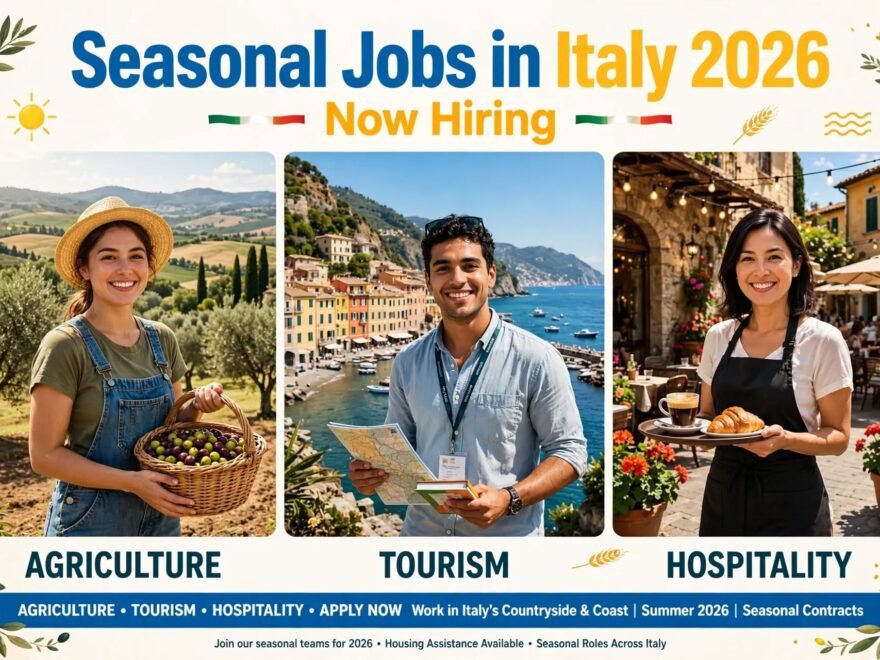
Italy is one of the most visited countries in the world. Millions of travelers arrive every year for its beaches, mountains, historic cities, food and wine. Behind every packed hotel, busy restaurant and bountiful harvest are thousands of seasonal workers who keep the country running.
That is why seasonal jobs in Italy are among the most accessible entry points into the Italian labor market. Employers in tourism, hospitality and agriculture rely on extra hands every year, and many of them recruit workers from abroad.
This guide explains what seasonal work in Italy looks like, which sectors hire, what you can expect to earn, how the legal route works for non-EU citizens, and how to improve your chances of getting hired.
What Are Seasonal Jobs in Italy?
Seasonal jobs are temporary positions tied to a period of peak demand. In Italy, they usually run from a few weeks to several months. Typical patterns include:
- Summer season (April to October): beach resorts, hotels, restaurants, camping sites and lake destinations.
- Winter season (December to April): ski resorts and alpine hotels.
- Harvest seasons (spring to late autumn): fruit, vegetables, grapes and olives.
Seasonal contracts are called lavoro stagionale in Italian. They are fixed-term contracts governed by Italian labor law and national collective agreements, which means you are entitled to a written contract, a stated wage, working-hour rules and social contributions.
Read Also: Nurse and Healthcare Jobs in Italy: Requirements and Recruitment Process
Why Seasonal Work Is Popular
- Low entry barrier: Many roles need no formal degree.
- Fast hiring: Employers often recruit within weeks of the season starting.
- Possible accommodation: Some employers provide housing or meals, or help arrange them.
- Cultural experience: You live and work inside Italian communities.
- Stepping stone: Good performance can lead to repeat seasons or longer contracts.
Tourism Jobs in Italy
Tourism is a pillar of the Italian economy, and its seasonal peaks create steady demand for staff.
Popular Tourism Roles
- Tour assistants and guides’ helpers: Supporting groups in cities like Rome, Florence and Venice.
- Beach club and lido staff: Setting up sunbeds, serving guests and maintaining facilities along the Adriatic and Tyrrhenian coasts.
- Campsite and holiday village staff: Reception, cleaning, maintenance and entertainment.
- Water sports and activity assistants: On lakes such as Garda, Como and Maggiore.
- Ski resort workers: Lift operators, rental shop staff and snow-park assistants in the Alps and Dolomites.
- Animation and entertainment staff: Running activities for families in resorts, often requiring languages.
Best Regions for Tourism Work
- Veneto and Emilia-Romagna: Beach resorts such as Rimini and Jesolo.
- Tuscany and Liguria: Coastal towns and heritage destinations.
- Sardinia and Sicily: Island resorts with long summer seasons.
- Trentino-Alto Adige and Valle d’Aosta: Winter sports and summer hiking.
- Lombardy lakes: Luxury hotels and lakeside tourism.
Skills That Help
Languages are a real advantage. English plus German, French, Russian or Dutch makes you valuable in resort areas. Basic Italian helps you integrate and opens better roles.
Hospitality Jobs in Italy
Hospitality is the largest source of seasonal vacancies. From family-run pensioni to five-star hotels, employers need reliable staff every season.
Common Hospitality Roles
- Waiter / waitress (cameriere): Serving in restaurants, hotel dining rooms and beach bars.
- Kitchen assistant (aiuto cuoco): Preparation, cleaning and supporting the chef.
- Commis chef and line cook: Suitable for those with some kitchen experience.
- Bartender (barista / barman): Especially in coastal and city venues.
- Housekeeping staff: Room cleaning and laundry in hotels and resorts.
- Receptionist and front desk staff: Typically requiring strong languages and customer service skills.
- Dishwasher (lavapiatti): A common entry-level role.
- Porter and concierge assistants: In larger hotels.
What to Expect From the Work
Hospitality work can be demanding. Shifts often include evenings, weekends and holidays, and the high season can mean long hours. In return, you gain practical experience, tips in some venues, and a network inside the industry.
Moving Up
Many chefs and managers started as kitchen assistants or waiters. Showing punctuality, a positive attitude and willingness to learn can lead to promotion or a return offer the following year.
Agriculture Jobs in Italy
Agriculture is the other major source of seasonal work. Italy produces wine, olive oil, fruit, vegetables, rice and much more, and harvests need large temporary workforces.
Key Agricultural Seasons
- Spring: Planting, pruning and early vegetable harvests.
- Summer: Fruit picking, such as peaches, apricots, melons and tomatoes.
- Late summer to autumn: Grape harvest (vendemmia) and apple picking.
- Autumn to winter: Olive harvest and processing.
Typical Agricultural Roles
- Fruit and vegetable pickers
- Grape harvest workers
- Olive pickers
- Greenhouse workers
- Packing house staff who sort and pack produce
- Tractor and machinery operators (experience required)
- Farm helpers on livestock or mixed farms
Where Agricultural Work Is Concentrated
- Piedmont, Tuscany and Veneto: Wine regions with large vineyards.
- Puglia and Calabria: Olives and vegetables.
- Emilia-Romagna: Fruit and tomato production.
- Trentino-Alto Adige: Apples.
- Sicily and Campania: Citrus fruit and vegetables.
- Lombardy and Piedmont: Rice fields.
Be Aware of the Realities
Farm work is physical and weather-dependent. Days can be long, and conditions vary between employers. This is also the sector where unfair practices occur, so always insist on a legal contract and proper pay.
How Much Do Seasonal Workers Earn in Italy?
Pay depends on the sector, region, role and the collective agreement (contratto collettivo nazionale) that applies. As a general picture:
- Hospitality and tourism: Wages follow national collective agreements for the tourism sector. Entry-level roles earn modest monthly pay, with higher rates for experienced chefs, bartenders and receptionists. Overtime, tips and board can add value.
- Agriculture: Pay is set by agricultural collective agreements and provincial contracts, often calculated per day or hour. Harvest roles can pay per quantity in some cases, but legal contracts should still guarantee minimum rates.
Figures change regularly, so check the current collective agreement for your sector and region before accepting an offer. Also ask whether accommodation, meals or transport are provided, and whether any cost is deducted from your wages. Deductions must be clear, written and lawful.
Do You Need a Visa for Seasonal Work in Italy?
This depends on your nationality.
EU / EEA Citizens
If you hold EU, EEA or Swiss citizenship, you can work in Italy without a work visa. You will need a valid ID or passport and, for longer stays, to register according to local rules and obtain an Italian tax code (codice fiscale).
Non-EU Citizens
Non-EU citizens generally need authorization to work in Italy. Seasonal employment is usually handled through Italy’s annual quota system, commonly known as the Decreto Flussi. In broad terms, the process works like this:
- Italy sets annual quotas for seasonal workers from eligible countries.
- An Italian employer applies for authorization (the nulla osta) through official channels during designated application windows.
- If approved, the worker applies for a seasonal work visa at the Italian embassy or consulate in their home country.
- After arrival, the worker signs the employment contract at the competent office and applies for the required residence document.
Key points to remember:
- The employer starts the process, not you.
- Quotas, eligible countries, dates and rules change from year to year. Always verify details on official Italian government and Ministry of Interior websites or through the Italian embassy.
- Official procedures never require you to pay a stranger for a guaranteed job. Treat such offers with suspicion.
Documents Commonly Needed
- Valid passport
- Signed job offer or employer authorization
- Proof of accommodation arrangements
- Health insurance where required
- Photographs and visa application forms
Requirements may differ, so confirm the exact list with the consulate.
How to Find Seasonal Jobs in Italy
1. Use Reliable Job Platforms
Look at reputable job boards, official employment portals and the European job mobility network EURES, which lists vacancies and advice for EU citizens.
2. Apply Directly to Employers
Hotels, resorts, campsites and farms often hire directly. Send a concise CV and a short, polite message, ideally in English and Italian. Applications for summer positions are often best sent between winter and early spring.
3. Join Social Media Groups and Local Pages
Many regional hospitality and farm groups share urgent vacancies. Stay careful and verify any employer before acting.
4. Work With Licensed Agencies
Italy has authorized recruitment agencies (agenzie per il lavoro) that place workers in tourism and agriculture. Make sure the agency is licensed and never pays you in exchange for a promised job.
5. Network Locally
If you are already in Italy, visit hotels or farms in person, ask local tourism offices, and speak with other workers. Word of mouth drives much of the hiring.
How to Write a CV for Seasonal Work
- Keep it to one page.
- Lead with relevant experience, even if it is informal.
- List languages clearly with your level.
- Mention availability dates and willingness to live on-site.
- Add a friendly photo only if the employer expects one; Italian CVs often include contact details and sometimes a photo, but it is not mandatory.
- Include a short cover message stating the role, season and why you are a good fit.
Tips to Succeed as a Seasonal Worker in Italy
- Learn basic Italian. Even simple phrases earn respect from colleagues and managers.
- Be punctual and reliable. Employers remember dependable workers.
- Keep copies of your documents, contract and payslips.
- Understand your contract before signing, including hours, wage, days off and accommodation terms.
- Budget carefully, especially in tourist areas where living costs are higher.
- Respect local customs, such as meal times and workplace etiquette.
- Stay in touch with employers. A good season can lead to a re-hire.
Common Challenges and How to Handle Them
Long Hours and Physical Demands
Rest well, stay hydrated and ask about the schedule before accepting. Know your rights regarding rest days and overtime.
Language Barriers
Use translation apps at first, but commit to learning key work vocabulary quickly.
Accommodation Costs
Prioritize employers who offer or assist with housing. If you rent privately, avoid paying large deposits before seeing the property.
Scams and Exploitation
Warning signs include:
- Requests for large upfront payments
- Promises of guaranteed visas
- No written contract
- Pressure to hand over your passport
- Unclear wages or illegal deductions
If something feels wrong, seek help from local trade unions, labor inspectorates or support organizations.
Seasonal Work as a Stepping Stone
Many workers use seasonal jobs to build a longer-term path in Italy. Depending on your situation and the rules in force, repeated seasonal employment, language progress and strong references can help you move toward permanent contracts or other work categories. Immigration rules are complex and change, so seek current advice from official sources or qualified professionals.
Conclusion
Seasonal jobs in Italy offer genuine opportunities for people who are willing to work hard, learn quickly and adapt to a new environment. Tourism and hospitality keep the country’s hotels, beaches and restaurants running, while agriculture feeds Italy and the world with its famous produce. Whether you are an EU citizen who can start applying immediately or a non-EU candidate navigating the quota system, preparation is everything.
Start early, rely on official information, protect yourself against scams, and treat every season as an investment in your skills and network. With the right approach, a few months of seasonal work could become the beginning of a lasting career in Italy.
Frequently Asked Questions (FAQ)
1. When is the best time to apply for seasonal jobs in Italy?
For summer tourism and hospitality, apply between winter and early spring. For harvests, check from late spring for fruit and from summer for grapes and olives. For non-EU workers, the quota application windows are set by the government, so monitor official announcements.
2. Can foreigners work seasonal jobs in Italy?
Yes. EU citizens can work freely, while non-EU citizens usually need authorization through the annual quota system and a work visa.
3. Do I need to speak Italian?
Not always, especially in international resorts, but basic Italian greatly improves your chances and your daily life.
4. Do employers provide accommodation?
Some do, or help arrange it. Always confirm in writing whether housing, meals or transport are included and what costs apply.
5. What is the easiest seasonal job to get in Italy?
Entry-level roles such as kitchen assistant, housekeeping, dishwasher, farm helper and fruit picker usually have the lowest requirements.
6. How long do seasonal contracts last?
Usually from a few weeks to several months, depending on the sector and the local season. Legal limits and conditions are set by Italian law and collective agreements.
7. How can I avoid job scams?
Never pay for a promised job or visa, insist on a written contract, verify the employer, and use official sources for visa information.
8. Can seasonal work lead to a permanent job?
It can, as strong performance and repeat seasons build trust and experience, but the immigration route depends on current rules, so check official guidance.
Disclaimer: Visa rules, quotas and wages change frequently. Always confirm current information with official Italian authorities before applying.
One comment