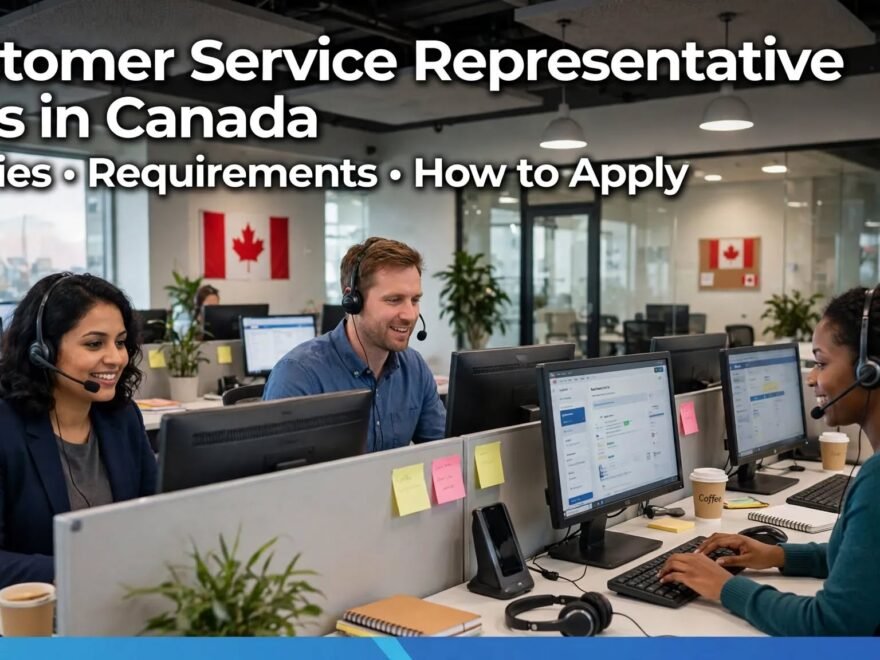
Customer Service Representative Jobs in Canada: Every business in Canada, from banks and airlines to online stores and telecom giants, depends on one group of people to keep customers happy: customer service representatives. If you enjoy talking to people, solving problems, and working in a stable field, customer service representative jobs in Canada can be an excellent career starting point.
These roles are popular with students, career changers, and newcomers to Canada because the entry barriers are relatively low, training is usually provided, and openings appear in every province. Many positions also offer remote or hybrid options, which has made the field even more attractive.
This guide covers what the job involves, what you can expect to earn, the qualifications employers want, where to find openings, and exactly how to apply with confidence.
What Does a Customer Service Representative Do in Canada?
A customer service representative (CSR) is the main point of contact between a company and its customers. You answer questions, resolve complaints, process orders or requests, and make sure people leave the interaction satisfied.
Jobs In Italy How to Apply Online: Jobs in Italy with Work Visa: Step-by-Step Guide to Getting Hired from Abroad
Common Daily Responsibilities
- Answering inbound calls, emails, and live chat messages
- Troubleshooting product or service problems
- Processing orders, returns, refunds, and account changes
- Updating customer records in CRM software
- Escalating complex issues to supervisors or specialist teams
- Explaining policies, pricing, and billing in simple language
- Meeting targets for response time, call quality, and customer satisfaction
Types of Customer Service Roles
The title “customer service representative” covers many different jobs:
- Call centre agent: handles high volumes of phone calls, often for telecom, insurance, or utilities.
- Chat and email support agent: resolves issues in writing, common in e-commerce and tech.
- Retail customer service associate: helps shoppers in stores or at service desks.
- Banking customer service representative: manages accounts, cards, and transactions.
- Technical support representative: troubleshoots software, internet, or device problems.
- Hospitality and travel service agent: works with airlines, hotels, and booking platforms.
Customer Service Representative Salary in Canada
Pay depends on the industry, province, experience, and language skills. The figures below are typical ranges based on general market patterns. Wages change over time, so check the government’s Job Bank wage tool for current numbers in your city.
Average Pay Ranges
| Experience Level | Typical Hourly Wage (CAD) | Approx. Annual Salary (CAD) |
|---|---|---|
| Entry-level | $16 – $20 | $33,000 – $41,000 |
| Mid-level (2–5 years) | $20 – $26 | $41,000 – $54,000 |
| Senior / Team Lead | $26 – $32+ | $54,000 – $66,000+ |
What Affects Your Earnings?
- Industry: Banking, insurance, and technology generally pay more than retail or basic call centre work.
- Location: Wages in Ontario, British Columbia, and Alberta tend to be higher, though living costs also vary widely.
- Bilingual ability: Speaking English and French can add a noticeable premium, especially in Quebec, Ottawa, and federal government roles.
- Shift type: Evening, overnight, and weekend shifts often come with differentials.
- Specialization: Technical support and financial services agents typically earn more than general support agents.
Benefits You May Receive
Many full-time employers offer extended health and dental coverage, paid vacation, retirement savings matching, performance bonuses, employee discounts, and paid training. Always compare the total compensation package, not just the hourly rate.
Requirements for Customer Service Jobs in Canada
One of the biggest advantages of this career is accessibility. Still, employers look for specific qualifications and qualities.
Education Requirements
- High school diploma is the standard minimum for most entry-level positions.
- A college diploma in business, communications, or a related field can help for banking, insurance, or supervisory roles.
- No degree is needed for many call centre and retail positions, since employers focus on communication skills and attitude.

Language Skills
Strong English is essential, both spoken and written. In Quebec and some federal or national roles, French is required or strongly preferred. Being bilingual is one of the fastest ways to stand out.
Essential Skills Employers Want
- Clear communication: speaking calmly and explaining things simply
- Active listening: understanding the real problem before offering solutions
- Empathy and patience: staying polite with frustrated customers
- Problem-solving: finding quick, accurate answers
- Computer literacy: typing speed, CRM tools, and multitasking between screens
- Time management: handling queues and targets without losing quality
- Adaptability: learning new products, scripts, and software quickly
Other Common Requirements
- A criminal background check (standard for banking, healthcare, and government roles)
- Reliable internet and a quiet workspace for remote positions
- Availability for flexible shifts, including evenings and weekends
- Legal authorization to work in Canada
Can Newcomers and International Applicants Get These Jobs?
Yes, and this is a major reason the field is popular. Many newcomers begin their Canadian careers in customer service because it helps them build local work experience, improve language skills, and understand workplace culture.
Things to Keep in Mind
- You need legal work authorization, such as permanent residency, a valid work permit, or a study permit with work conditions. Immigration rules change, so confirm your eligibility on the official Government of Canada website.
- Employers rarely sponsor work permits for entry-level customer service roles, so having your own authorization is usually necessary.
- Canadian experience matters to many employers. A first customer service job can be the stepping stone to better roles.
- Your accent is not a barrier as long as you are clear and confident. Practising with mock calls helps.
Top Industries Hiring Customer Service Representatives
Opportunities are spread across sectors:
- Banking and financial services: major banks and credit unions hire constantly for phone and branch support.
- Telecommunications: internet, mobile, and cable providers run large support centres.
- E-commerce and retail: online shopping has increased demand for chat and email agents.
- Insurance: claims support and policy service representatives are in steady demand.
- Travel and airlines: reservation, baggage, and loyalty program agents.
- Healthcare and pharmacy services: appointment scheduling and patient support.
- Technology and SaaS: technical support and customer success roles.
- Government services: federal and provincial agencies hire service representatives, often with good benefits.
Where to Find Customer Service Jobs in Canada
Using several channels increases your chances.
Best Job Search Platforms
- Job Bank (Government of Canada): a free, trustworthy source with wage data and verified postings.
- Indeed Canada: the largest listing aggregator.
- LinkedIn: ideal for networking and company-specific roles.
- Glassdoor: useful for salary insights and employee reviews.
- Company career pages: apply directly to banks, telecom firms, and retailers.
- Staffing agencies: can place you in contract or temporary roles quickly.
Tips to Stay Safe
Never pay a fee to apply for a job or to “guarantee” employment. Legitimate employers do not ask for money upfront, and they do not hire based only on a messaging app conversation. Research the company and verify the posting on its official website.
How to Apply for Customer Service Representative Jobs in Canada: Step by Step
Step 1: Build a Canadian-Style Resume
Canadian resumes are typically one to two pages and focused on achievements. Keep these points in mind:
- Do not include a photo, age, marital status, or religion.
- Start with a short professional summary.
- List recent experience first, using action verbs and measurable results (for example, “Resolved 40+ customer inquiries daily with a 95% satisfaction rating”).
- Highlight relevant skills such as CRM software, multilingual ability, and typing speed.
- Customize keywords from each job posting so applicant tracking systems pick up your resume.
Step 2: Write a Short, Targeted Cover Letter
Keep it to one page. Explain why you want to work for that company, give one or two examples that show your service skills, and finish with a confident call to action.
Step 3: Apply Online
Fill out each application carefully. Many employers use automated screening, so use the same wording as the job description where it truthfully applies to you.
Step 4: Prepare for the Interview
Customer service interviews usually include behavioural questions. Practise using the STAR method (Situation, Task, Action, Result).
Common questions include:
- “Tell me about a time you dealt with an angry customer.”
- “How do you handle multiple tasks at once?”
- “Why do you want to work in customer service?”
- “What would you do if you didn’t know the answer to a customer’s question?”
Some employers add a phone screen, typing test, or role-play call. Speak clearly, smile while talking (it changes your tone), and stay positive.
Step 5: Follow Up
Send a brief thank-you email within 24 hours. It shows professionalism and keeps your name fresh in the hiring manager’s mind.
Read Also: Fruit Farm Worker Jobs in Canada
Remote and Work-From-Home Customer Service Jobs
Remote customer support has grown significantly in Canada. Many employers now hire for fully remote or hybrid roles, especially in e-commerce, software, and financial services.
What Remote Employers Expect
- A computer that meets their technical specifications
- Stable high-speed internet
- A quiet, private workspace
- Strong self-discipline and written communication skills
Remote roles may be restricted to certain provinces because of employment law and tax rules, so read the posting carefully.
Career Growth: Where Can Customer Service Lead You?
Customer service is rarely a dead-end job. It builds transferable skills that employers value everywhere. Typical advancement paths include:
- Senior Customer Service Representative
- Team Lead or Supervisor
- Quality Assurance Specialist
- Training Coordinator
- Customer Success Manager
- Operations or Call Centre Manager
- Sales, Account Management, or Human Resources roles
Earning certifications in customer experience, conflict resolution, or CRM platforms such as Salesforce can speed up promotion.
Tips to Stand Out From Other Applicants
- Learn French, even at an intermediate level, if you want access to more roles.
- Improve your typing speed and accuracy, since many tests measure both.
- Show customer empathy in your application with real examples.
- Get familiar with common tools like Zendesk, Salesforce, Microsoft 365, or Freshdesk.
- Network on LinkedIn by connecting with recruiters and current employees.
- Be flexible with shifts during your first job, since open schedules help you get hired quickly.
- Request references from previous supervisors, even from outside Canada, if possible.
Challenges of the Job (and How to Handle Them)
An honest look helps you decide if this career fits you.
- Difficult customers: Stay calm, apologize sincerely, and focus on solutions rather than blame.
- Performance metrics: Targets for call times and satisfaction scores can feel stressful. Prioritize quality first, and speed will improve.
- Repetitive tasks: Variety comes with experience and promotion.
- Shift work: Plan sleep, meals, and personal time to avoid burnout.
Conclusion
Customer service representative jobs in Canada offer a dependable way to enter the job market, build valuable skills, and grow into higher-paying roles. With entry-level wages that generally start around $16 to $20 per hour and rise with experience, specialization, and bilingual ability, this field suits both students and experienced professionals seeking stability.
Prepare a clean Canadian-style resume, practise your interview answers, search on trusted platforms like Job Bank, and apply consistently. Every interaction you have with a customer sharpens your communication and problem-solving, and those skills carry over to almost any career.
If you’re ready to start, update your resume today and send out your first few applications this week.
Frequently Asked Questions (FAQ)
1. Do I need experience to get a customer service job in Canada?
Not always. Many entry-level positions provide paid training. Previous experience in retail, hospitality, or any role involving people helps, but a positive attitude and strong communication skills count for a lot.
2. What is the average salary of a customer service representative in Canada?
Most representatives earn roughly $16 to $26 per hour, depending on industry, location, and experience. Senior and specialized roles can pay more. Check Job Bank for current local wage data.
3. Is a college degree required?
Usually no. A high school diploma is the common minimum. A diploma or degree can help with advancement into supervisory or specialist roles.
4. Can international students work in customer service in Canada?
Many study permits allow limited off-campus work. Rules and hour limits change, so always verify the latest conditions on the official immigration website before accepting a job.
5. Are bilingual customer service jobs better paid?
Often, yes. Employers value English-French bilingual agents, and these roles may come with higher pay and more opportunities, especially in Quebec and federal positions.
6. Are there remote customer service jobs in Canada?
Yes. Remote and hybrid positions are widely available, particularly in e-commerce, technology, and financial services. You will need reliable internet and a quiet workspace.
7. How long does it take to get hired?
It varies. Some people receive offers within a few weeks, while others take a few months. Applying to many postings, tailoring each resume, and preparing for interviews shortens the process.
8. What is the best way to apply?
Apply directly on company career pages and Job Bank, optimize your resume with relevant keywords, and follow up politely after interviews.
One comment