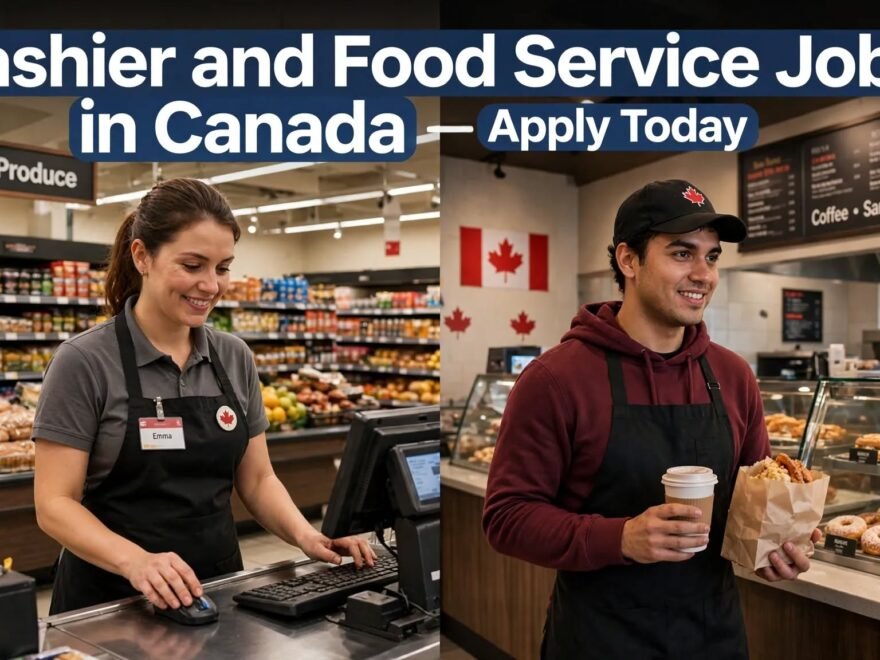
If you want to start earning in Canada quickly, few career paths are as accessible as cashier and food service jobs in Canada. Restaurants, cafés, grocery stores, and fast-food chains are among the country’s most consistent employers. They hire all year round, often train from scratch, and frequently move from interview to first shift in days rather than weeks.
That speed matters. Whether you are a student, a newcomer settling into a new country, a career changer, or someone returning to the workforce, an entry-level job in Canada gives you income, confidence, and something every Canadian employer values: local work experience.
In this guide, you will learn which roles are available, what they typically pay, what documents you need, how to apply, and how to stand out in a crowded applicant pool. We will also cover the common mistakes and scams to avoid. Let’s get started.
Why Cashier and Food Service Jobs Are Ideal Entry-Level Roles
Before looking at specific positions, it helps to understand why these jobs hire so quickly.
High Employee Turnover Creates Constant Openings
Retail and hospitality are busy, physically active, shift-based industries. People move on to school, other careers, or better-paying roles, which means employers are almost always recruiting. For a job seeker, this turns into steady openings in nearly every city and town.
Training Is Provided On the Job
Most employers do not expect prior experience. A cashier can learn a point-of-sale (POS) system in a few shifts. A food counter attendant learns menu items, hygiene rules, and service steps during paid training. This makes these jobs excellent no experience jobs in Canada.
Read Also: Skilled Trades Jobs in Canada: Electrician, Plumber, and Carpenter Careers Explained
Flexible Schedules
Shifts are commonly offered in mornings, evenings, weekends, and holidays. That flexibility suits students, parents, and anyone working a second job.
A Stepping Stone to Better Opportunities
Working in customer service teaches communication, speed, teamwork, and problem-solving. Many shift supervisors, store managers, and restaurant owners began exactly where you might begin today.
Most Popular Entry-Level Cashier and Food Service Roles
Here are the positions that hire most frequently across Canada.
1. Cashier
Cashiers scan items, handle cash and card payments, bag products, process returns, and answer basic customer questions. You will find these roles in supermarkets, pharmacies, convenience stores, department stores, and gas stations.
Typical duties:
- Greeting customers and processing transactions accurately
- Balancing the cash drawer at the start and end of a shift
- Handling returns, refunds, and loyalty programs
- Keeping the checkout area clean and organized
Skills needed: basic math, patience, attention to detail, and clear communication.
2. Food Counter Attendant (Fast Food Worker)
This role is common in quick-service restaurants and cafés. You take orders, assemble meals, prepare drinks, and keep the counter clean. In Canada’s job classification system, this occupation is grouped as food counter attendants and kitchen helpers.
Typical duties:
- Taking orders in person, at the drive-through, or through kiosks
- Preparing beverages and simple food items
- Following food safety and sanitation standards
- Restocking supplies and cleaning workstations
3. Server or Waitstaff
Servers work in sit-down restaurants, pubs, and cafés. Beyond the hourly wage, many servers earn tips and gratuities, which can raise total income noticeably during busy periods.
Typical duties:
- Presenting menus and explaining dishes
- Taking orders and delivering food
- Processing payments
- Ensuring guests have a positive experience
4. Kitchen Helper and Dishwasher
Kitchen helpers support cooks by washing dishes, prepping ingredients, and keeping the kitchen clean. It is one of the easiest ways to enter a restaurant, especially if your spoken English is still developing.
5. Line Cook or Prep Cook
With a bit of kitchen exposure, you can move into cooking roles. Prep cooks chop, portion, and organize ingredients, while line cooks prepare dishes during service. Pay often rises with skill.
6. Barista
Coffee shops are always in demand of friendly, quick learners. Baristas prepare espresso drinks, handle payments, and keep the café running smoothly.
7. Host or Hostess
Hosts greet guests, manage seating, and handle reservations. The role is a good fit for people with strong people skills who prefer a less physically demanding position.
8. Grocery Clerk and Bagger
Supermarkets often hire people to stock shelves, bag groceries, and assist at self-checkout. These jobs are an easy way into retail and often lead to cashier positions.
Where to Find Fast Hiring Employers
Some employers are known for quick hiring cycles. While availability varies by location, these categories are worth checking first:
- Quick-service restaurant chains: Tim Hortons, McDonald’s, A&W, Subway, Wendy’s, Burger King, and Starbucks regularly recruit for counter and drive-through roles.
- Grocery stores and supermarkets: Large chains such as Loblaws banners, Sobeys, Metro, Walmart, and Costco hire cashiers and clerks.
- Pharmacies and convenience stores: Shoppers Drug Mart, Rexall, Circle K, and similar stores often need part-time cashiers.
- Discount and department stores: Dollarama, Canadian Tire, and other big retailers hire frequently, especially before holiday seasons.
- Independent restaurants and cafés: Smaller owners can move very fast. A walk-in visit with a resume can sometimes lead to a same-day trial shift.
Tip: Many employers hire in bulk before summer, back-to-school season, and the winter holidays. Applying a few weeks ahead of these periods can improve your chances.
Typical Pay and Benefits
Pay depends on the province, city, employer, and your role. Every province and territory sets its own minimum wage, and these rates are updated regularly, often once a year. In most regions, entry-level hourly wages fall roughly between the legal minimum and a few dollars above it, with higher rates in expensive cities or for in-demand roles.
Because rates change, always check your province’s official labour standards page before accepting an offer.
Other Ways You Can Earn More
- Tips: Servers, baristas, and delivery staff may receive tips, which vary by restaurant type and shift.
- Overtime: Working beyond standard weekly hours is generally paid at a higher rate under provincial rules.
- Shift premiums: Some employers pay extra for nights, weekends, or holidays.
- Meal discounts: Many restaurants offer free or discounted staff meals.
- Benefits: Larger chains may offer health benefits, employee discounts, or scholarship programs after a qualifying period.
Requirements: What Do You Need to Get Hired?
The documents and skills you need are fairly simple, but you must have them organized before you apply.
Legal Right to Work
To work in Canada, you must be a Canadian citizen, a permanent resident, or a foreign national with valid authorization to work. If you are not a citizen or permanent resident, check which permit applies to you. Options include an open work permit, a post-graduation work permit, a spousal open work permit, or a study permit that allows part-time work.
International students are generally allowed to work a limited number of hours off-campus during academic sessions, with fuller schedules permitted during scheduled breaks. Since these rules have been updated in recent years, confirm the current limits on the official Immigration, Refugees and Citizenship Canada (IRCC) website.
Social Insurance Number (SIN)
Your employer will ask for a Social Insurance Number. You need it for payroll and tax purposes. If you are eligible and do not yet have one, apply through Service Canada as soon as you arrive or receive your work authorization.
Food Handler Certification
For food service jobs, many provinces and local health authorities require or strongly encourage a food handler certificate. Courses are inexpensive, can often be completed online in a few hours, and make your application much stronger. Requirements differ by province, so check with your local public health authority.
Language Skills
Basic English or French is essential, depending on the region. You do not need perfect fluency for many kitchen or stocking roles, but customer-facing jobs require clear communication. In Quebec, French is often expected, so learning it increases your options significantly.
Soft Skills Employers Love
- Reliability and punctuality
- A friendly, positive attitude
- Ability to work under pressure
- Teamwork and willingness to learn
- Basic math and cash handling accuracy
Important Note for Foreign Workers and Newcomers
If you are outside Canada and hoping to move for a cashier or restaurant job, proceed carefully. Employers in many cases must prove they cannot find a Canadian worker before hiring a foreign national through certain programs, and rules for lower-wage positions have become stricter in recent years. Processing times and eligibility change, so rely only on official government sources for current rules.
Warning about scams: Genuine employers and genuine government programs do not ask you to pay to secure a job offer. Be cautious of anyone who guarantees a job or a visa in exchange for money. Verify every employer, and use official sources such as the Government of Canada’s Job Bank to confirm legitimacy.
Step-by-Step: How to Get Hired Fast
Follow this practical plan to shorten your job search.
- Prepare your documents. Keep your work authorization, SIN, ID, and any certificates ready.
- Create a short, Canadian-style resume. Keep it to one page, with no photo, no date of birth, and no marital status. Highlight customer service, teamwork, and any relevant experience, even if it was informal.
- Get your food handler certificate. For restaurant jobs, this is often the single fastest way to improve your chances.
- Search on multiple platforms. Use Job Bank, Indeed, LinkedIn, and company career pages. Many chains let you apply online in under ten minutes.
- Apply in person where appropriate. For small businesses, visit during off-peak hours (for example, mid-afternoon) with a printed resume and ask for the manager politely.
- Apply to many positions. Send at least 10 to 15 applications in your first week. Volume matters in entry-level hiring.
- Respond quickly. Employers often call within a few days, and they may move on if you do not answer. Check your phone and email often.
- Be flexible with availability. Open evenings and weekends make you far more attractive.
- Prepare for the interview. Practise simple answers (see below).
- Follow up. A short thank-you message after the interview helps you stay memorable.
Interview Tips for Cashier and Food Service Roles
Interviews for these jobs are usually short and informal, sometimes only 10 to 20 minutes. Managers mostly want to know whether you are reliable, friendly, and easy to work with.
Common Questions to Expect
- Why do you want to work here?
- What is your availability?
- How would you handle a rude or upset customer?
- Tell me about a time you worked in a team.
- Are you comfortable working on weekends and holidays?
How to Answer Well
Use simple, honest answers with a real example. For instance, if asked about a difficult customer, explain that you would stay calm, listen carefully, apologize for the inconvenience, and look for a solution or call a supervisor if needed.
Presentation Matters
- Dress neatly and comfortably, such as a clean shirt and dark pants.
- Arrive 10 minutes early.
- Smile, make eye contact, and offer a firm handshake if it feels appropriate.
- Bring your documents and a copy of your resume.
Challenges to Expect (and How to Handle Them)
Being honest about the realities helps you prepare.
- Physical demands: You will often be on your feet for hours. Wear comfortable, supportive shoes.
- Irregular hours: Shifts can change weekly. Plan transport and childcare ahead.
- Customer stress: Not every customer is polite. Stay professional and remember it is rarely personal.
- Entry-level pay: Wages start modest, so budget carefully and look for ways to increase your hours or skills.
- Cold-weather commuting: In many regions, winter travel adds time and cost. Consider living near public transit.
How to Grow Your Career from an Entry-Level Job
These roles are not just a short-term fix. With the right approach, they can become the foundation of a long-term career. More also: Fabrication Welder Jobs in Canada
Build Your Reputation
Show up on time, volunteer for extra tasks, and learn multiple stations. Managers promote people they can trust.
Move Into Leadership
With a few months of reliable performance, you may be considered for shift lead, supervisor, or assistant manager roles, which usually come with higher pay and more responsibility.
Build Industry Credentials
Courses in food safety, responsible alcohol service (such as certifications required in many provinces for servers), customer service, or hospitality management can open higher-paying jobs.
Use Canadian Experience as a Springboard
Many newcomers use their first job to learn workplace culture, improve English, build references, and then move into their original profession. A positive reference from a Canadian employer can be extremely valuable.
Best Practices for Finding Safe, Legitimate Jobs
- Use trusted job boards and official company websites.
- Confirm the employer’s address, phone number, and online presence.
- Never share banking details or your SIN before receiving a legitimate, written offer.
- Understand your rights: you are entitled to at least minimum wage, safe working conditions, and proper payment regardless of your status.
- Keep copies of schedules, pay records, and any agreements.
Conclusion
Cashier and food service jobs in Canada remain some of the fastest and most accessible ways to begin working, earning, and building a future. Employers are frequently hiring, training is usually provided, and schedules are flexible. With the right documents, a clean resume, a food handler certificate where needed, and a positive attitude, you can often go from application to first shift very quickly.
Start small, stay reliable, and keep learning. The skills you gain behind a counter or in a busy kitchen can carry you into supervisory roles, new industries, and long-term success in Canada.
Frequently Asked Questions (FAQ)
1. Do I need experience to get a cashier or food service job in Canada?
No. Most employers hire entry-level staff and provide paid on-the-job training. Showing enthusiasm and reliability matters more than prior experience.
2. How fast can I get hired?
It varies, but many quick-service restaurants, grocery stores, and cafés can interview and hire within a few days to two weeks. Small independent businesses may be even faster.
3. Can international students work in these jobs?
Often yes, if their study permit allows off-campus work. Be sure to follow the weekly hour limits that apply to your situation and check the latest IRCC rules.
4. Do I need a food handler certificate?
It depends on your province and the type of job. Many employers prefer or require it for roles that involve preparing or serving food, and it is usually quick and affordable to obtain.
5. How much do cashiers and food service workers earn?
Pay depends on the province and employer, but starting wages are generally at or slightly above the local minimum wage. Tips, overtime, and premiums can increase your earnings.
6. Can I get a job in Canada from abroad?
It is possible in some cases, but it requires proper work authorization, and rules for lower-wage positions are strict and change over time. Always use official government resources and avoid anyone who asks for money in exchange for a job.
7. Which is better: cashier or food service work?
It depends on your preferences. Cashier roles are usually calmer and more predictable, while restaurant jobs can be faster-paced and may offer tips. Both are strong starting points.
8. Can these jobs lead to permanent residency?
Canadian work experience can help in some immigration pathways, but eligibility depends on many factors, including the occupation, wage level, and program rules. Check the official IRCC website or speak with a licensed immigration professional for accurate guidance.
Disclaimer: Wages, minimum wage rates, work permit rules, and certification requirements change regularly. Please verify current details with official Government of Canada and provincial sources before making decisions.
One comment